Try The Tool
Model whether moving from C1 to B3 could be worth it
Use the BER calculator while you read to pressure-test whether a higher energy rating could justify more prep before you list.
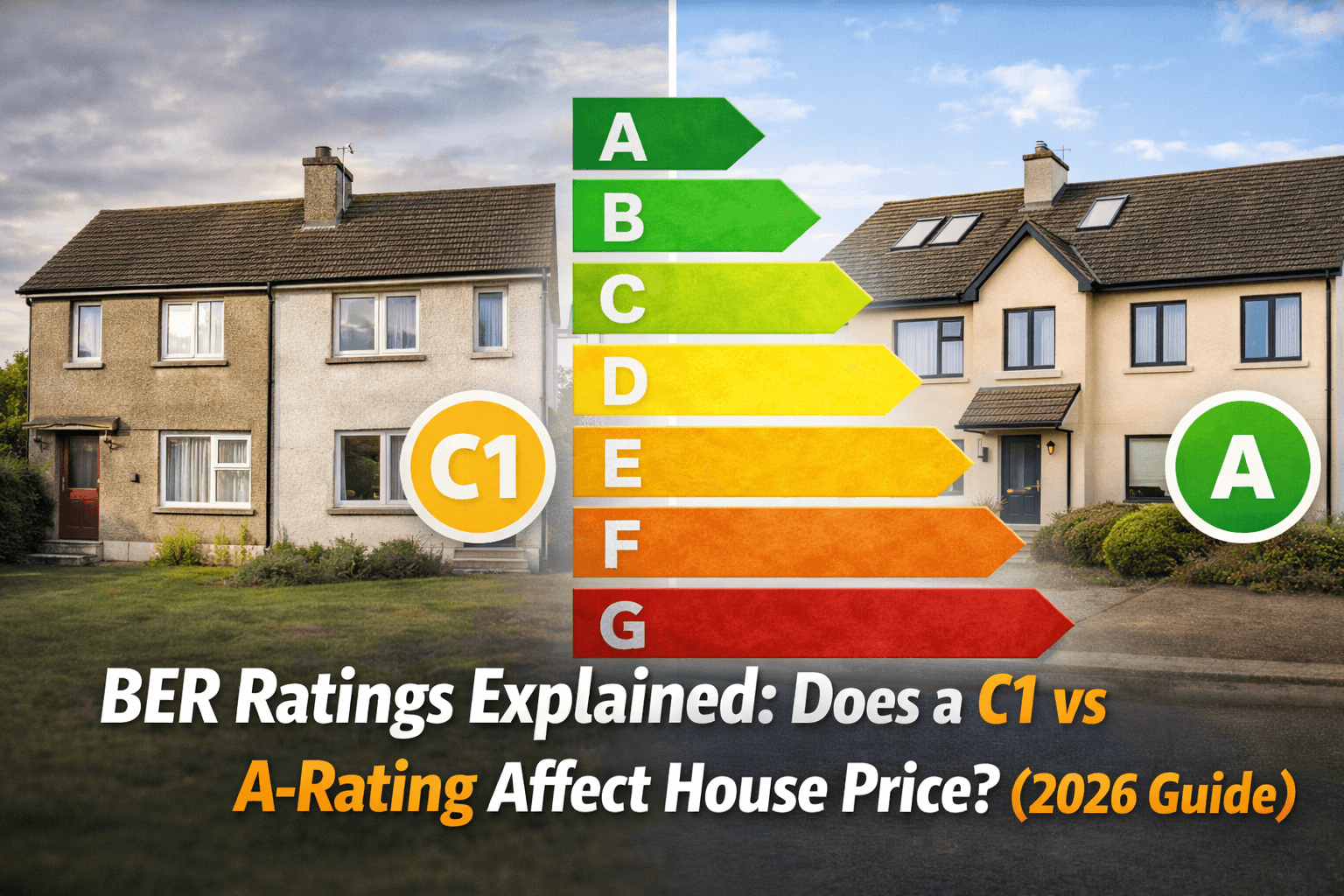
If you are searching "is C1 a good BER rating", the short answer is: C1 is a decent rating, but it is not a premium one.
In practical terms, a C1-rated home is usually reasonably comfortable, more efficient than many older Irish properties, and unlikely to put most buyers off. But it still sits below the B-rated homes that increasingly stand out on listing portals and in buyer conversations.
If you want the broader context first, start with BER Ratings Explained. If you are selling, this guide works best alongside our deeper look at how BER can affect sale value.
What does C1 actually mean on the BER scale?
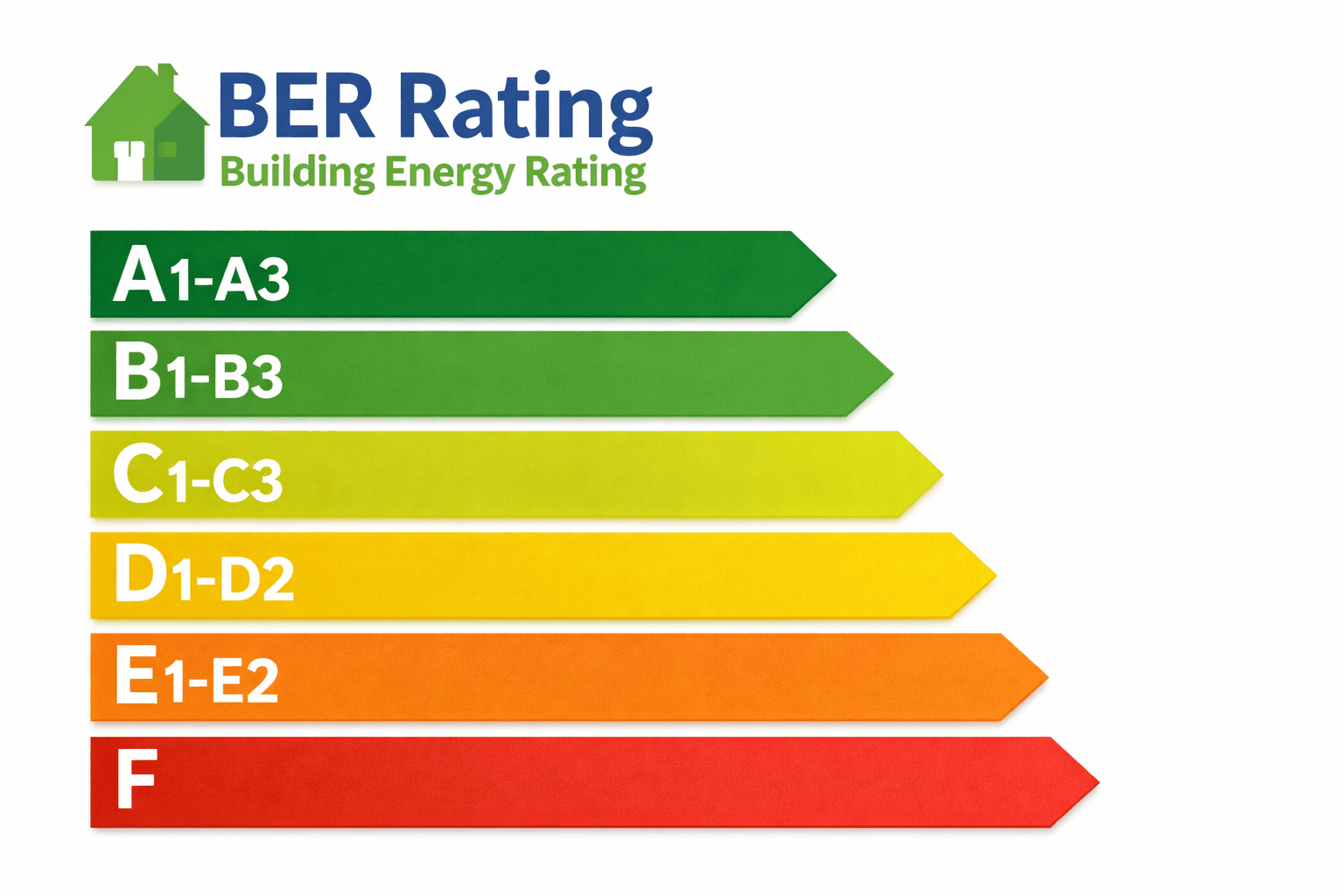
Ireland's BER system runs from A to G and is based on the calculated energy use of the property. On the SEAI scale, C1 sits between B3 and C2, which puts it in the upper-middle part of the national range rather than near the top.
A C1 BER corresponds to an energy performance indicator of roughly 151 to 175 kWh/m2/yr. That means the home is typically efficient enough to feel workable day to day, but still has room for improvement.
| BER band | Approximate position | How buyers usually read it |
|---|---|---|
| A / B | Top end of the scale | Strong energy performance and low-running-cost signal |
| C1 | Upper-middle | Respectable, but not a standout selling point |
| C2 / C3 | Middle | Average-to-fair, with more obvious upgrade questions |
| D to G | Lower end | Higher running-cost and retrofit concern |
Is C1 good for living in?
Usually, yes. A C1 home is normally easier and cheaper to heat than a D-rated or E-rated equivalent, and it should feel more comfortable through colder months if the property has decent insulation, windows, and heating controls.
That said, C1 is not the same thing as "future-proof" or "high efficiency". Compared with B3 or better, you can still expect more heat loss, more sensitivity to energy prices, and more buyer questions about whether extra upgrades are needed.
Is C1 a good BER rating when selling a house?
For most sellers, C1 is good enough not to be a problem, but not strong enough to be a major advantage on its own.
A BER certificate must be available before residential property is advertised for sale or rent in Ireland, so if you are getting your paperwork together now, also read Documents Needed to Sell a House in Ireland.
From a marketing point of view, buyers tend to read C1 as "solid but improvable". They do not usually treat it like a red flag, but they also will not react to it the way they react to a clean B3, B2, or A-rated listing.
That matters most when buyers are comparing similar homes side by side. If one property has a stronger BER, newer heating, and evidence of recent energy upgrades, it can feel easier to justify the higher asking price.
Does C1 add value to a property?
A better BER can help value, but it is best treated as one pricing factor rather than a guaranteed premium. Irish research has shown a positive relationship between stronger BER performance and higher asking prices, but the effect varies by property type, location, and wider market conditions.
That is why sellers should avoid thinking about BER in isolation. A C1 rating interacts with presentation, local supply, extension quality, layout, and agent execution. For a fuller breakdown, read our free property valuation guide and our BER value guide.
How buyers usually interpret a C1 BER
- Comfort should be acceptable for normal day-to-day living.
- Running costs are likely to be more manageable than many older homes.
- There may still be upside from moving to B3 or above.
- The home is unlikely to win on BER alone if stronger-rated competitors are nearby.
If you are a first-time seller trying to judge how much attention buyers will pay to BER versus everything else, this also pairs well with our First-Time Seller's Guide.
Should you upgrade from C1 to B3 before selling?
Sometimes, yes. The jump from C1 to B3 is often realistic enough that relatively focused work can make a difference, especially if the home is already close to that threshold.
Common improvements that may help include topping up attic insulation, improving cavity wall insulation where suitable, upgrading heating controls, replacing an inefficient boiler, or addressing obvious draught and heat-loss issues. The right package depends on the home, not just the rating label.
If you want to sense-check the potential upside before spending anything, use our BER Impact Calculator, then compare that against the broader cost of selling a house in Ireland.
SEAI grants can also change the maths of an upgrade, so check the latest SEAI home energy grant information before making a decision.
What does C1 mean for landlords?
For landlords, C1 is worth watching closely. As of March 2026, Ireland's published minimum standards for rented accommodation do not set a general BER minimum for all private rentals, but minimum BER thresholds have been discussed in housing and climate policy debates.
So the practical takeaway is this: a C1 rating puts you in a safer position than lower-rated stock if policy tightens, but you should not rely on assumptions or old headlines. Check the latest official position on minimum standards in rented accommodation before making a decision.
Frequently Asked Questions
Is C1 a good BER rating in Ireland?
C1 is a decent BER rating. It is usually comfortable enough for day-to-day living and stronger than many older homes, but it is still below the B-rated homes that buyers increasingly see as more attractive.
Is C1 better than average?
Broadly, yes. C1 sits in the upper-middle part of the BER scale, so it is usually better than lower-rated stock, but it is not near the top end of the market.
Will a C1 BER hurt my house sale?
Usually not. It is rarely a deal-breaker on its own. The bigger question is whether competing homes nearby have a stronger BER and whether buyers in your area are likely to pay more attention to energy performance.
Should I upgrade from C1 to B3 before selling?
Only if the likely uplift outweighs the cost and disruption. In some homes the move is realistic and worthwhile; in others, buyers will care more about pricing, presentation, or layout than the rating change.
Is C1 enough for renting in Ireland?
There is no general statutory C1 minimum across all private rentals in the published minimum standards as of March 2026, but landlords should keep an eye on future changes because BER thresholds have been part of policy discussions.
Related BER guides
- BER Ratings Explained in Ireland: the broader overview of the full BER scale and the B3 benchmark sellers should understand.
- How BER Can Affect House Sale Value: the seller-focused pricing and buyer-demand angle.
The bottom line
C1 is a respectable BER rating. It is better than many homes buyers will compare you against, and it should not be viewed as bad news. But it is not a premium badge either, which is why the real question is not just "is C1 good?" but "is C1 strong enough for my market, my price point, and my sale strategy?"
If you are selling, the best next step is to combine BER context with real pricing advice: read how to get a free property valuation, then compare local estate agents who understand how BER plays into demand in your area.
For the May 2026 change to BER labels, read New BER Scale Ireland 2026.