Quick answer
The answer in brief
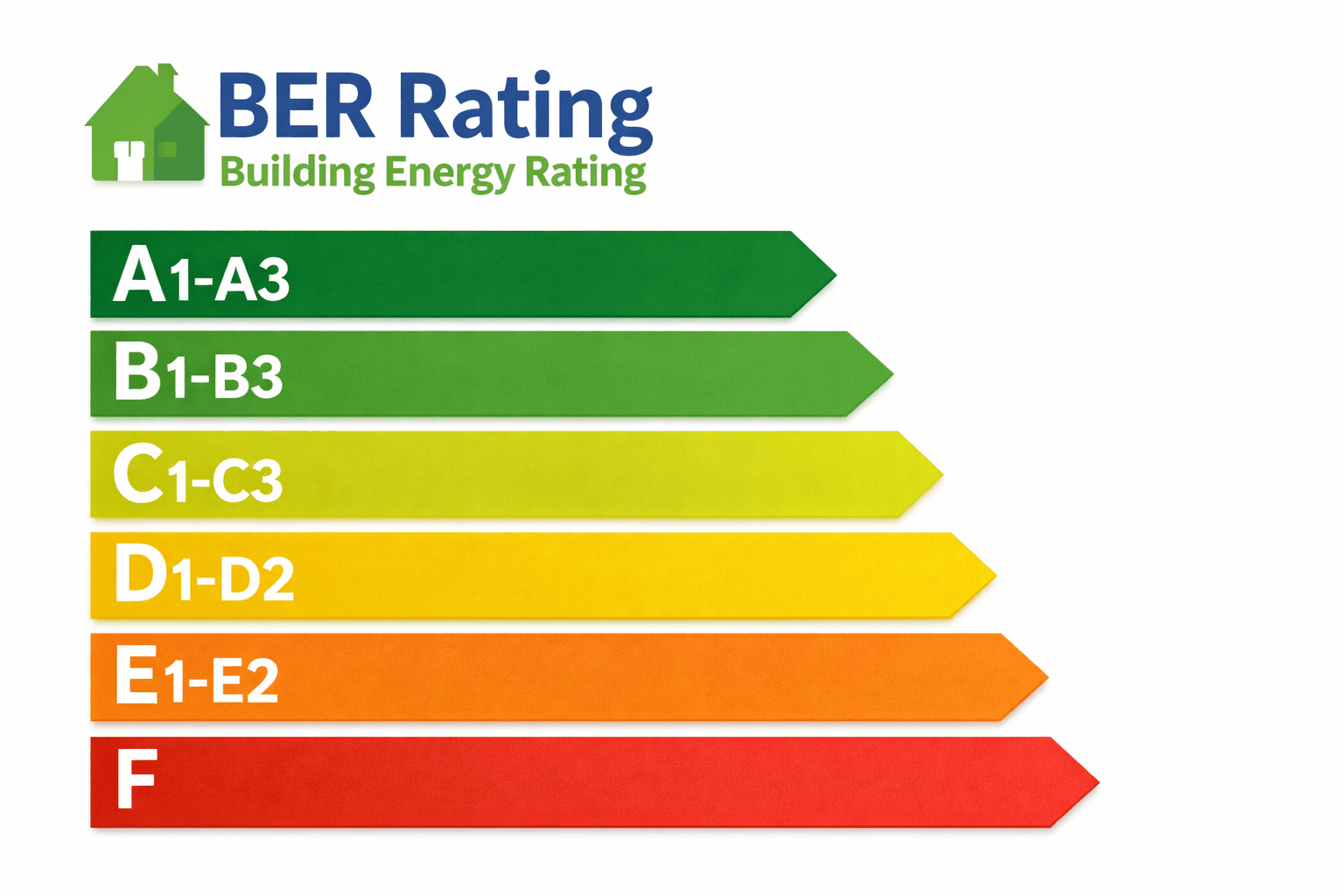
For new residential BER certificates issued from 24 May 2026, Ireland uses the simplified A0, A, B, C, D, E, F and G scale. Older valid certificates can still show legacy ratings such as B3 or C1, so both formats will remain visible for years.
- Ratings nearer A0 indicate better energy performance.
- A BER certificate is generally valid for 10 years unless qualifying changes require a new assessment.
- Always check the certificate date when comparing legacy and new labels.
BER Ratings Explained: Quick Answer
A good BER rating depends on what you are trying to achieve, but for most sellers in Ireland the practical benchmark is simple: B-rated homes stand out, C-rated homes are usually acceptable, and D-to-G homes trigger more buyer questions.
This guide explains the full BER scale, why B3 matters in practice, how buyers often read each band, what a BER assessment typically costs, and when small upgrades are worth doing before sale.
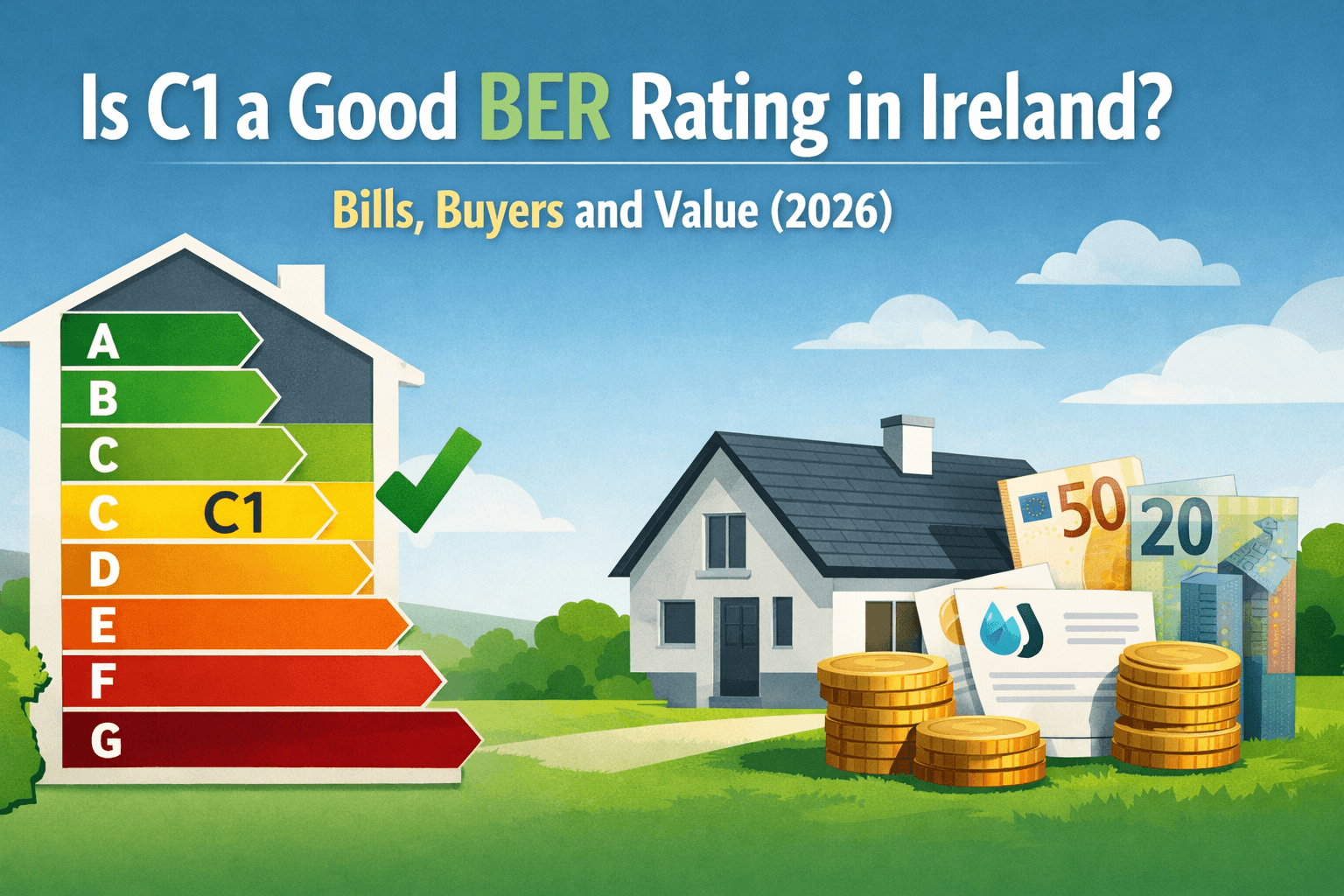
If your main question is specifically about C1, use our dedicated guide: Is C1 a Good BER Rating in Ireland?.
What the BER scale means in Ireland
The BER scale runs from A (best) to G (worst). It is designed to estimate the energy performance of a property based on insulation, heating systems, ventilation, glazing, and other efficiency factors.
In plain English, BER is a shorthand for how expensive a home may feel to heat, how comfortable it is likely to be in colder months, and how much retrofit work a buyer may think is still ahead.
| BER band | What it usually signals | How sellers should think about it |
|---|---|---|
| A1 to A3 | Top efficiency, common in newer homes | Strong marketing advantage where comparable homes are older or less efficient |
| B1 to B3 | Strong performance and lower running-cost perception | Often the most commercially useful range for sellers |
| C1 to C3 | Normal for a lot of established housing stock | Usually acceptable, but rarely a major premium signal on its own |
| D to G | Higher retrofit concern and higher heating-cost perception | More likely to trigger negotiation pressure or buyer hesitation |
What counts as a good BER rating when selling?
For most Irish sellers, a BER is "good" when it does not create resistance during valuation, listing, and buyer comparison.
- A or strong B: usually a genuine selling point.
- Lower B or C: usually fine, but less likely to win the comparison on energy performance alone.
- D or below: more likely to raise concerns about future upgrade costs.
That does not mean every seller should spend heavily to chase a better certificate. BER is one factor among many, including location, presentation, layout, parking, extension quality, and local supply.
Why B3 matters more than most BER bands
The BER threshold sellers should understand most clearly is B3. In practice, that is the level many buyers associate with stronger modern efficiency, and it is also the band often linked to green mortgage eligibility.
That matters because lower borrowing costs can change buyer behaviour. Even where the bank criteria are not the whole story, a property that sits at B3 or above can feel easier to justify than a similar home just below that line.
So while the BER scale has many bands, the commercial jump many sellers care about most is often from C into B3+, not from one A-band to another.
How buyers usually read BER bands
Buyers do not always read BER with technical precision. They often use it as a quick shortcut for likely bills, comfort, and future spending.
- A-rated: efficient, future-facing, lower-running-cost story.
- B-rated: strong and reassuring, especially around B3 or better.
- C-rated: acceptable and common, but still open to questions about further upgrades.
- D to G: more likely to make buyers budget mentally for retrofit works.
If your specific concern is where C1 sits in that buyer mindset, read our dedicated C1 guide.
Does BER affect house price?
Often, yes, but not in a neat one-size-fits-all way.
Stronger BER performance can support value because it improves buyer confidence, lowers perceived running costs, and can widen the pool of buyers who feel comfortable bidding. But the effect depends heavily on area, property type, competing stock, and what the local market already expects.
For a seller, the more useful question is usually not "does BER matter?" but "does BER matter enough in my market to justify spending before sale?"
For a deeper price-focused version of that question, read The BER Factor: How BER Can Affect Sale Value.
How much does a BER certificate cost in 2026?
There is no fixed national price, but typical BER assessment ranges in 2026 are often around:
- 1 to 2-bed apartment: EUR150 to EUR180
- Standard 3-bed semi-detached house: EUR200 to EUR250
- Larger detached home: EUR280 to EUR350
Prices vary by county, assessor workload, and property complexity. It is worth getting a few quotes from SEAI-registered assessors rather than assuming the first quote is the market rate.
Which BER upgrades tend to matter most before sale?
If your property is on the border between bands, targeted low-to-mid-cost upgrades may matter more than expensive cosmetic work with no energy impact.
- Top up attic insulation if it is weak or outdated.
- Improve heating controls where practical.
- Switch older lighting to LED throughout.
- Insulate the hot water cylinder and exposed pipework where relevant.
- Deal with obvious draught-proofing issues.
The key is not to upgrade blindly. First estimate likely uplift, then compare that with cost, delay, and the risk that buyers in your area may not fully pay you back for the works.
Should you upgrade before listing, or sell as-is?
If your BER is already respectable for your local market, you may be better off pricing the property properly and focusing on agent quality, photography, and launch strategy. If the rating is dragging behind comparable homes, selective improvements may be worthwhile.
Use seller maths, not hope:
- expected uplift from the stronger BER
- minus upgrade and reassessment cost
- minus any time delay or market risk
If you are preparing for sale now, pair this guide with Documents Needed to Sell a House in Ireland and our property valuation guide.
Related BER questions sellers ask
- Is C1 a Good BER Rating in Ireland?
- How BER Can Affect House Sale Value
- How to Sense-Check a Property Valuation
BER should help you price and position a property more intelligently. It should not be treated as the only thing that determines what your home will achieve.
If you are worried the BER may not fully capture works you have already completed, read BER Not Reflecting Upgrades?.
Update for 2026: SEAI is introducing a simplified residential BER scale from 24 May 2026. Read New BER Scale Ireland 2026 for the seller and landlord implications.